
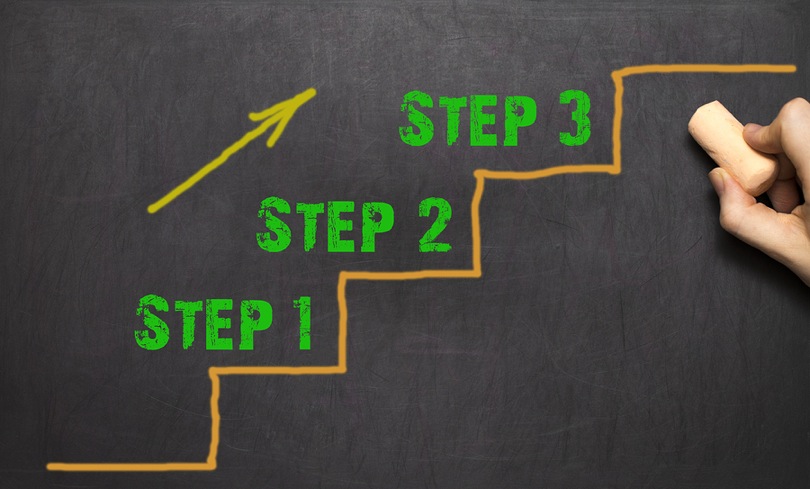
Buying a home can be a very intimidating process, especially if you’ve never done it before.
So the first thing you should do before you start the home buying process is to decide whether owning a home is right for you. It may or may not be and this decision depends on you and your circumstances. Take into account that if you do buy a home, there are extra responsibilities and costs that go along with owning a home-such as property taxes, utilities, homeowners insurance, lawn care, home maintenance and repairs, etc. It is a long term commitment. Are you ready?
Step 1: Check Your Credit Report & Score
You are allowed to receive one free copy of your credit report per year. You can do this by visiting Annualcreditreport.com. Scores range from approximately 300 to 850; generally, the higher your score, the better loan you’ll qualify for. Don’t forget to check your report for errors. You will need to get errors repaired. It may help your credit score. Most mortgage companies will require a minimum score of 640. If you are below that. Let’s work on repairing your credit.
Step 2: Figure out How Much You Can Afford
Don’t forget to factor in money you’ll need for a down payment, closing costs, fees (such as appraisal, inspection, etc.) and the costs of remodeling or furniture. I recommend that you have about $6000 on hand for these fees: earnest money $500-$2500, home inspection $500, appraisal $575, etc. Remember that you don’t always have to put down 20 percent. There are loans available with little to no down payment. An experienced home loan expert can help you understand all your loan options, closing costs and other fees. I recommend that you set aside one week’s pay as the amount you should spend for your monthly house payment.
Step 3: Find the Right Lender and Real Estate Agent
To find the right mortgage lender get recommendations from your friends and family. Ask lots of questions and make sure they have answers that satisfy you. Make sure to find someone that you are comfortable with and who makes you feel at ease. Use a lender that you can work with face to face, although it is not always necessary to go to the lender’s office. Make sure that you are using someone local who you can meet with if you need to. I have a list of lenders who have proven to be knowledgeable, reliable, and responsible. Once you have the right mortgage lender, make sure you at least get a pre-approval. Pre-qualifications are only a guess based on what you tell the lender and are no guarantee, whereas a pre-approval will give you a better idea of the loan you qualify for. The lender will actually pull your credit and get more information about you. However, you could even take it one step further by getting an actual approval before you start home shopping. That way, when you’re ready to make an offer, it will make the sale go much quicker. Additionally, your offer will look more appealing than other buyers. Some sellers will not entertain your offer without proof that you can actually get a loan from a local lender.
The type of loan matters, so make sure you understand the type that your
lender is qualifying you for. Most Realtors will not take you seriously without some type of pre-qualification. Do not take out any additional credit once we start this process. It could jeopardize obtaining a mortgage. The underwriter will be checking your credit again before closing. Do not buy appliances, furniture, cars, etc.
Step 4: Get the Right Mortgage for Your Situation
There are many different types of mortgage programs out there: FHA, VA, USDA, and convention are the most popular. Each program has its advantages. Remember to ask your mortgage lender lots of questions about which mortgage is right for you and your situation. See step 3. Make sure you are using a good, local lender.
Step 5: Look for the Right Home
Make a list of the things you’ll need to have in the house. Ask yourself how many bedrooms and bathrooms you’ll need and get an idea of how much space you desire. How big do you want the kitchen to be? Do you need
lots of closets and cabinet space? Do you need a big yard for your kids and/or pets to play in?
Once you’ve made a list of your must-have’s, don’t forget to think about the kind of neighborhood you want, types of schools in the area, the length of your commute to and from work, and the convenience of local shopping. Take into account your safety concerns as well as how good the rate of home appreciation is in the area.
Be realistic. You may think you need more than you can actually afford. Look at what the houses that meet your wish list actually cost. You may need to prioritize your wants/needs. Look at what you can expect in your price range.
Please be considerate of the homeowners. Please do not bring pets on showing
appointments.
Step 6: Make an Offer on the Home
Now that you’ve found the home you want, you have to make an offer. You can ask your real estate agent to find out how much comparable homes have sold for. Once you’ve made your offer, don’t think it’s final. The seller may make a counter-offer to which you can also counter. But you don’t want to go back and forth too much. Sometimes, you have to meet in the middle. Once you’ve agreed on a price, you’ll make an earnest money deposit ($500-$1000+) to bind the contract, which is money that goes in escrow to give the seller a sign of good faith. This money is applied to the amount that you will need to pay at closing.
Home inspections
Make sure you get a home inspection during the allotted inspection time frame. It will be well-worth the money spent to have more information about the property’s condition. I can get you some names and numbers of inspectors who have proven themselves reliable and responsible. Alabama is a buyer beware state. It is up to the buyer to inspect that property to make sure that you know what you are buying. Allow me to say it again. It is your responsibility, as the buyer, to have everything about the property that interests or concerns you inspected. In the state of Alabama, a home is sold as is. Hire a professional home inspector to inspect the home. Go over his report, have him send me a copy, let’s talk about it. We need to be concerned with issues of health, safety, major appliances and systems, and the structure of the house. We are not concerned with cosmetic items. You want to make those changes yourself, that way you get to oversee how they are done.
Your lender will order an appraisal. The appraiser is looking out for the interests of the lender. He will let the lender know if he sees anything that the lender needs to be aware of before lending money on the property.
Step 7: Close on Your Home
Setting the closing date that is convenient to both parties may be tricky, but can certainly be done. Remember that you may have to wait until your rental agreement runs out and the seller may have to wait until they close on their new house. Typically, from contract to closing is taking about 30- 45 days. It can be more or less, depending on your lender. Be sure you talk to your mortgage banker to understand all the costs that will be involved with the closing so there are no surprises. Closing costs will likely include (but are not limited to) your down payment, origination
and application of title fees, appraisal fees, attorney fees, inspection fees, taxes, insurance, etc. Go over these costs with your lender.
Step 8: Move In!
You’ve got your mortgage, closed the deal and now it’s time to move in! Whether you use a mover or not is up to you, depending on your financial situation and how much stuff you have to move; perhaps also, whether you
have a lot of friends willing to help you move. Either way, you’re done with the home buying process! Just start unpacking and start enjoying your home!
Buying a home doesn’t have to be a hassle if you’re prepared and you
know what to do and when to do it. Choose an experienced home loan lender and a knowledgeable real estate agent-they are the key to helping you have a smooth home buying experience!
Cyber Warning
*Check email addresses carefully
*CALL to verify source and reason for sending money to the mortgage company or closing attorney, especially
any last minute funding changes that come via email.
*Do not send your social security number in an email. Please CALL
 Angie Sold Quick